
Strengthening Fit-for-work, Compliance & Site Access
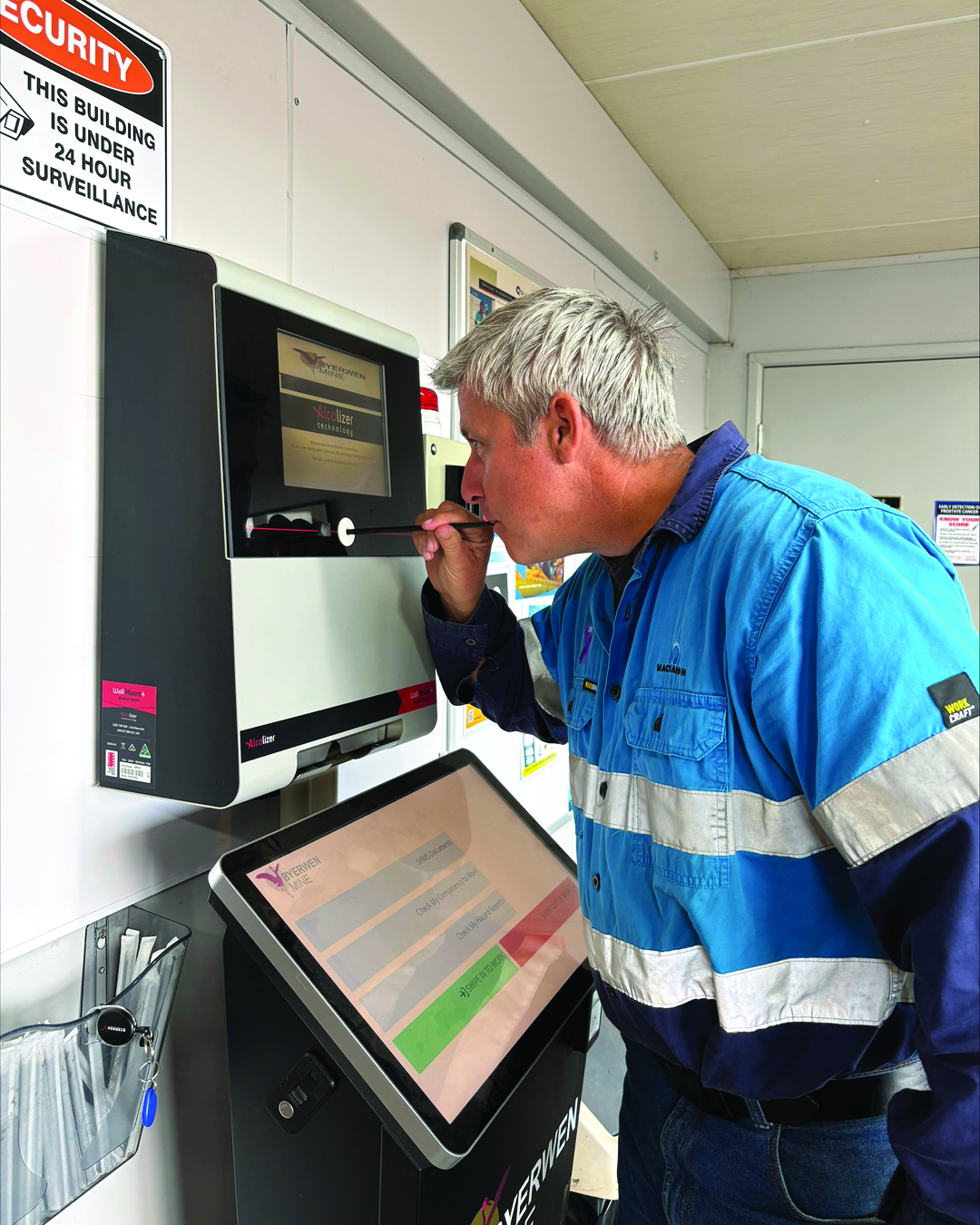
Byerwen Mine Strengthens Fit-for-work & Site Access with Connected Controls
Queensland mine operators are feeling the pressure.
With Resources Safety & Health Queensland (RSHQ) and the Mines Inspectorate lifting expectations around fit-for-work assurance across fatigue, mental health, and physical impairment, sites are being asked a simple question more often, and more directly:
Can you prove your controls are working, consistently, and in real time?
For many operations, the challenge is not intent. It is fragmentation.
Breath testing might be happening. Compliance checks might be happening. Access control might be happening. But when those controls sit across disconnected systems or manual processes, the result is often:
- Delays at the gate
- Inconsistent decision-making
- Increased admin effort
- Weaker auditability
- Avoidable exposure when decisions need to be made quickly
At Byerwen Mine, the objective was clear:
Strengthen fit-for-work and site access assurance by connecting critical controls into one operational flow.
And that is exactly what was delivered, through a practical integration between Alcolizer and RSURED.
Turning a critical control into a connected process
On most sites, a breath test can become a “tick-the-box” step that sits outside of the broader compliance picture.
Byerwen Mine took a different approach.
Through a successful Alcolizer + RSURED API integration, breath test results now flow directly into RSURED’s compliance and access workflows in real time, so fit-for-work assurance becomes part of how access decisions are made, not something that sits alongside them. How it works on the ground
- A worker completes a breath test at the Alcolizer wall unit
- The result is transmitted to RSURED via API
- The worker proceeds to the RSURED kiosk and swipes onto site
- RSURED immediately assesses eligibility based on:
- the breath test result
- compliance requirements tied to that access point
- Site access is governed by live, current information, not delayed updates or manual reconciliation
Bottom line: fit-for-work checks are no longer isolated from access control. They are embedded inside it.
In a high-risk operating environment, that matters.
What we delivered (and why it works)
This was not about adding another system.
It was about making existing controls stronger by connecting them.
Working alongside Byerwen Mine, Macmahon, and Alcolizer, RSURED helped implement an integrated process that:
- Removes gaps between fit-for-work testing and access decisions
- Reduces reliance on manual intervention
- Improves traceability and confidence in critical control effectiveness
- Strengthens operational readiness for supervision and emergency response
This is what evidence-based assurance looks like in practice:
A control you can trust, because it is timely, connected, and auditable.
Operational value: what this enables at Byerwen
The integration delivers more than a cleaner workflow. It creates a stronger control environment for day-to-day operations. Key outcomes include:
- Safer and more secure site access
- Decisions are based on real-time fit-for-work and compliance data, not disconnected checks.
- Integrated random drug and alcohol testing workflows
- Supporting ongoing assurance programs without increasing friction for frontline teams.
- Real-time visibility of who is on site
- Supporting stronger operational awareness and supervision.
- Better fatigue risk control
- Swipe in and out data provides verified time-on-site visibility to support fatigue controls like break compliance and overtime exposure.
- More accurate emergency evacuation and muster information
- Based on actual site entry activity, not assumptions.
- Improved area isolation and access management
- Through live dashboards and system-driven controls.
- Reduced manual handling and administration
- By removing the need to reconcile separate systems and re-check information.
- Greater confidence in critical control effectiveness
- Through timely, reliable, and auditable fit-for-work data.
In practical terms, Byerwen Mine has reduced workarounds, closed system gaps, and strengthened the reliability of fit-for-work assurance as part of everyday operations.
Why this matters right now (for the wider industry)
Fit-for-work is not just a policy requirement. It is a frontline control that underpins:
- Safety outcomes
- Governance expectations
- Operational integrity
- Regulator confidence
With regulatory focus increasing across Queensland, the standard is shifting toward:
- Faster, evidence-backed decision-making
- Clear accountability and traceability
- Controls that reflect real-world site conditions in real time
Partnership in action (and a model worth repeating)
This outcome reflects the value of collaboration between Byerwen Mine, Macmahon, RSURED, and Alcolizer to solve a real operational challenge with a solution that is practical, scalable, and immediately useful.
It is also a strong example of how targeted integration can unlock far greater value from existing systems.
Not more complexity.
Not more standalone processes.
Just better: connected controls, delivering stronger outcomes for workers and the operation.
Byerwen Mine continues to invest in practical improvements that strengthen compliance and support operational excellence. This successful go-live is one more example of that commitment in action.
Ready to connect fit-for-work to site access in real time?
If your fit-for-work checks, compliance requirements, and access decisions are spread across disconnected tools, RSURED can help you bring them into one auditable operational flow.
Request a walkthrough to see how RSURED can connect fit-for-work assurance, compliance verification, and access control using real-time integrations.